
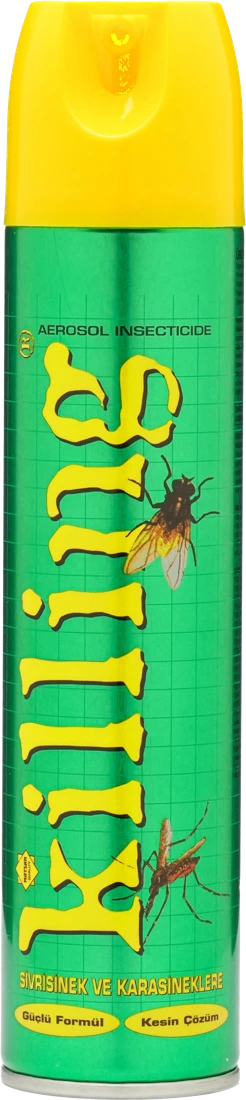
KILLING INSECTICIDE AEROSOL
FREQUENTLY ASKED
QUESTIONS.
Your guide to safe preparation, correct use and follow-up.

01AUTHORISATION AND PRODUCT BASICS
01Is Killing Insecticide Aerosol authorised by the Ministry of Health?
+
Killing Insecticide Aerosol is a Type 18 biocidal product authorised by Türkiye’s Ministry of Health. Its authorisation number is 2026/324, dated 13 October 2026. The authorisation holder is Netpa Tüketim Ürünleri Pazarlama ve Ticaret Ltd. Şti.
02What is Killing Insecticide Aerosol, and who is it for?
+
It is a ready-to-use insecticide in a 300 ml aerosol can. The label identifies it as a product for general public use. Use it only for the pests, areas and quantities specified on the label; it is not a personal-care product.
03Which pests can it be used against?
+
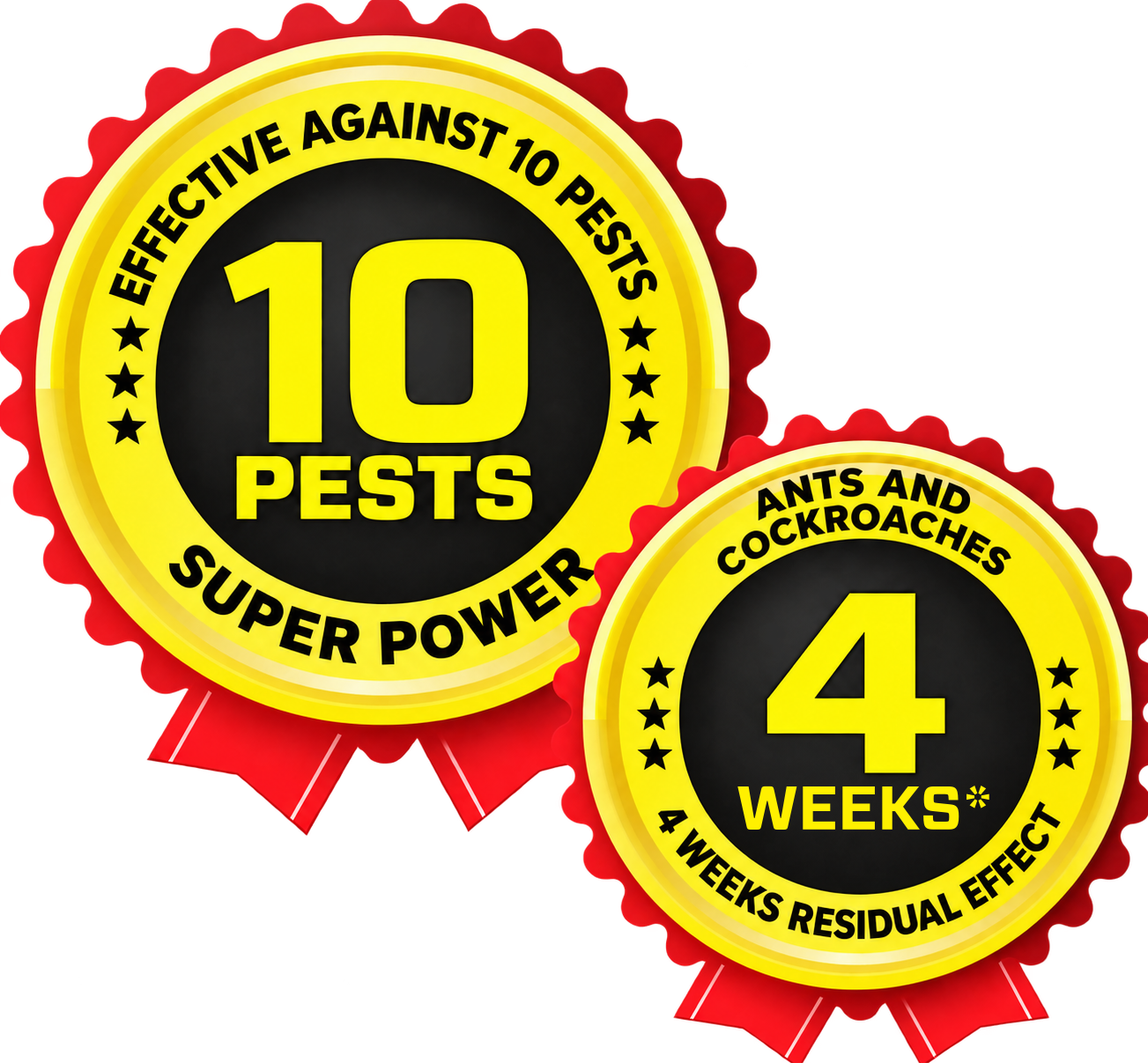
It is intended for 10 targets: mosquitoes, houseflies, sand flies, ants, cockroaches, poultry red mites, fleas, spiders, bed bugs and ticks. Directions for flying pests differ from surface treatment directions. Choose the guide for your target pest.
04What are the active substances and pack size?
+
The active substances are Cyphenothrin 0.15% and Imiprothrin 0.1% by weight. The net volume is 300 ml. This is a ready-to-use aerosol; do not dilute it.
05Can I use it in the same way as Killing Max Spray?
+
No. Their formulations, packaging, target pests, application quantities and waiting periods differ. Aerosol treatment is based on room volume for flying pests and surface area for relevant crawling pests. Do not apply Max’s three-month/two-month residual claims or one-hour closed-room period to the aerosol; follow the label of the product you are using.
06Can it replace a skin-applied insect repellent?
+
No. Killing Insecticide Aerosol is not a skin-applied repellent. Do not spray it on people, animals, clothing or personal-contact items. Personal skin protection requires a separate product specifically labelled for that use.
02PREPARATION AND SAFETY
07How should I prepare the room?
+
Remove food and food containers, personal-contact items such as toys, animals and their housing, including aquariums and cages. Children and other people must be out of the room. Keep away from flames, sparks and hot surfaces. For indoor treatment, close doors and windows as directed on the label, then leave the room when application is complete.
08What if there is a baby or child at home?
+
Babies and children must not be present in the treatment area. Remove toys and items they touch directly; do not treat beds, bedding or clothing. Do not use the room until the required closed-room and ventilation periods are complete. Prevent children from touching treated surfaces.
09What should I do about pets, birds or aquariums?
+
Remove animals, aquariums and cages before treatment. Do not spray animals, food or water bowls, or items they touch directly. Animals must stay out during application and the required ventilation period. The product label calls for removal from the area, not simply covering them.
10Can I use it in a kitchen or near food?
+
Suitable surrounding areas and hiding places in a kitchen may be considered according to the target-pest directions. First remove food and its containers. Do not spray food-preparation worktops, dishes, exposed food or food-contact surfaces. Suitable areas such as under a sink or along cabinet bases are different from food-contact surfaces.
11Can I spray beds, sofas, clothing or toys?
+
Do not apply to beds, sheets, pillows, clothing, toys or other surfaces that people or animals touch directly. Sofa seating and similar contact surfaces must not be treatment targets either. Select label-permitted surrounding hiding places rather than spraying furniture and belongings indiscriminately.
12Is it flammable? Can I use it near a cooker or electrical socket?
+
The label states “extremely flammable aerosol” and “pressurised container: may burst if heated”. Keep away from heat, sparks, flames and hot surfaces; do not smoke. Do not spray into a flame, electrical appliance or socket. Never pierce or burn the can, even when empty.
13What if someone is pregnant, has asthma or another health sensitivity?
+
No blanket assurance of suitability or harmlessness can be given. For a specific health condition, consult a healthcare professional with the product label before use. Follow the rule that no one other than the person applying or ventilating may be present during those stages; do not assume a separate safe waiting time for a medical condition.
03APPLICATION BY TARGET PEST
14How do I apply it against mosquitoes, houseflies and sand flies?
+
Close doors and windows. Hold the can at shoulder height and spray towards the target pests and their habitats for 5–6 seconds per 28 m³ of room volume. Reach label-specified areas such as window edges, around bins and under sinks. After treatment, keep the room closed for 30 minutes, then ventilate for at least one hour.
RELATED PEST GUIDE ↗15How do I treat cockroaches, ants and other surface targets?
+
Locate pests around wall bases, skirting boards, pipe entries, bins, window ledges, cracks and sheltered areas. For cockroaches, ants, poultry red mites, fleas, spiders and bed bugs, spray the identified pests and their habitats from 30 cm away for 5–6 seconds per 12 m². Indoor treatment must be followed by a 30-minute closed-room period and at least one hour of ventilation.
RELATED PEST GUIDE ↗16Can I spray my body or garden for ticks?
+
Do not use it on ticks attached to a person or animal. For ticks, the label specifies surface treatment in unoccupied indoor areas and around the home, at 5–6 seconds per 12 m². This is not permission for general garden, agricultural or plant treatment. Follow the labelled area restrictions.
RELATED PEST GUIDE ↗17Can I spray poultry directly for red mites?
+
No. Do not spray people or animals other than the target pests. For poultry red mites, consider suitable hiding surfaces only within the unoccupied indoor areas permitted by the label, after removing animals and feed. This product is not an animal treatment.
RELATED PEST GUIDE ↗18What is the difference between 28 m³ and 12 m²?
+
For mosquitoes, houseflies and sand flies, 28 m³ is room volume: length × width × height. The 12 m² figure is the area for the relevant surface treatment. These measurements are not interchangeable; floor area alone is not room volume.
19Should I spray each insect for 5–6 seconds?
+
No. The 5–6 seconds refers to the labelled 28 m³ room volume or 12 m² treatment area, not to every individual insect. Follow the method and quantity for your target pest and the total area or volume.
20Will extra spray or repeated applications improve the result?
+
Do not exceed the label quantity. More spray does not guarantee a better result and may increase exposure. Check the target, treatment area and whether the product reached the intended location; do not increase application frequency on your own.
04WAITING AND VENTILATION
21How long must the room remain closed after treatment?
+
Leave after completing indoor treatment and keep the room closed for 30 minutes. Then ventilate for at least one hour before normal use resumes. Children, other people and animals must not use the area during this period.
22Can the 30-minute wait and one-hour ventilation run at the same time?
+
No. They are consecutive: first keep the room closed for 30 minutes, then ventilate for at least one hour. Ventilating immediately after spraying does not fulfil the required closed-room stage.
23Can I stay in the room while it is treated or ventilated?
+
Leave when spraying is complete; do not wait inside during the closed-room period. The label states that no one other than the user may be present during application and required ventilation. Taking the steps needed to ventilate is different from using the room normally; do not spend time in it before both stages are complete.
24Can I return early if I cannot smell the product?
+
No. Smell is not a substitute for the required waiting and ventilation periods. Complete the 30-minute closed-room period followed by at least one hour of ventilation. An absence of smell does not mean treated surfaces can be touched.
25Do I need to remove every piece of furniture?
+
The label does not instruct you to remove all furniture. Remove food and containers, personal-contact items such as toys, animals and their housing. Keep beds, textiles and direct-contact surfaces out of the treatment. Choose the correct target areas rather than spraying indiscriminately over the room and its contents.
05RESIDUAL EFFECT AND FOLLOW-UP
26Which pests does the residual effect of up to four weeks apply to?
+
It applies to ants and cockroaches. The label states four weeks (30 days). Treated surfaces must not be washed or wiped if the residual effect is to be maintained. It depends on pests contacting appropriately treated surfaces.
RELATED PEST GUIDE ↗27Does the same four-week period apply to bed bugs, fleas or mosquitoes?
+
No. The residual claim for ants and cockroaches must not be extended to other targets. Follow the specific application directions and as-needed reassessment for other pests; do not assume four weeks of protection.
28Should I apply it every day?
+
No. Daily treatment is not a general instruction. The label gives a 30-day interval for ants and cockroaches, and “as needed” for other targets. “As needed” does not mean unlimited or continuous spraying. Assess the pest and the result, and do not exceed the label quantity.
29What happens if I wipe or wash the treated area?
+
To maintain residual activity against ants and cockroaches, treated surfaces must not be wiped or washed. For that reason, do not select food-preparation or direct-contact surfaces for treatment. Choose suitable surrounding areas from the outset rather than leaving a surface dirty to preserve the product.
30I still see pests after treatment. What should I do?
+
Check that you identified the pest correctly, reached the right locations with the correct quantity, and considered new entry points. Hidden areas or continuing sources may remain untreated. Follow the relevant guide instead of repeatedly adding more spray; seek professional assessment for a heavy or persistent problem.
31Does it kill eggs, and is one treatment enough?
+
The product label does not claim that it kills all eggs or resolves every infestation with one treatment. Do not assume either outcome. Combine correct application with monitoring of sources and hiding places, and assess any need to repeat treatment according to the label interval.
32Why might spraying only visible bed bugs fail to resolve the problem?
+
Bed bugs may be present in concealed hiding places. Inspect label-permitted areas around bed frames, behind headboards, along skirting boards and in cracks. Do not treat mattresses, bedding, pillows or contact textiles. Obtain professional assessment if the problem persists or is widespread.
RELATED PEST GUIDE ↗33Can I spray my cat or dog to treat fleas?
+
No. A flea claim does not permit application to an animal. Use the product only in the suitable surrounding areas and surfaces allowed by its label, after removing animals. Consult a veterinarian about fleas on a pet.
RELATED PEST GUIDE ↗06STORAGE AND SHELF LIFE
34Where and how should I store it?
+
Keep it upright and closed in its original container in a dry, cool, well-ventilated place, out of reach of children and animals and away from food, drinks and feed. Protect it from sunlight and heat; do not expose it to temperatures above 50°C. Do not leave it in a hot vehicle or next to a heat source.
35What is the shelf life before and after opening?
+
The label gives a shelf life of two years at room conditions (25 ±2°C), and one year after opening. Check the production and expiry dates on your own can; the after-opening period does not extend the printed expiry date. Follow the storage conditions.
Use biocides safely. Read the product label before use. The label on your product is the reference for application quantities, timing and safety instructions.